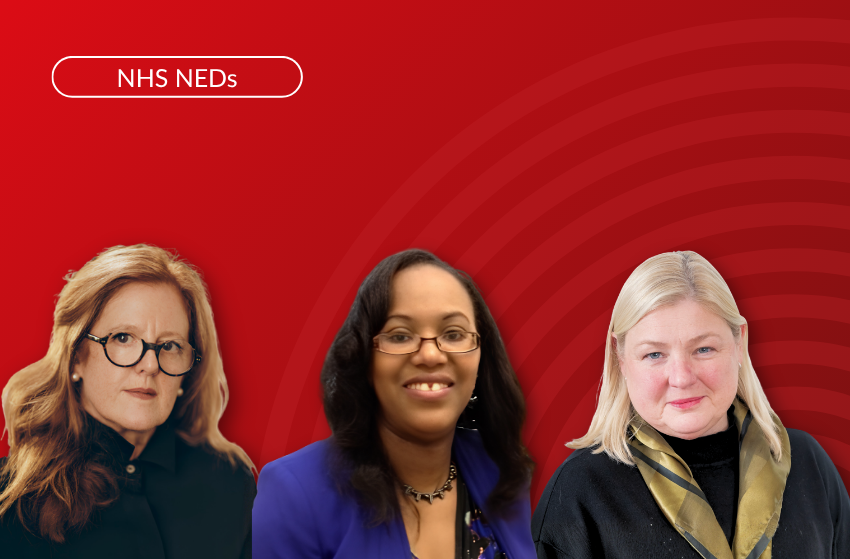
GatenbySanderson is currently hosting a series of webinars designed to help prospective candidates better understand the NHS NED opportunity and what it takes to succeed in the role. Bringing together experienced NHS Chairs, Non-Executive Directors and sector leaders, these sessions offer practical insight into life on an NHS board, the realities of governance and assurance, and the skills and qualities organisations are seeking. They are also an opportunity to demystify the application process, hear first-hand experiences from those already serving on NHS boards, and help senior leaders decide whether an NHS NED appointment could be the right next step in their board career.
Professor Suzanne Shale (Vice Chair and Senior Independent Director, NED, Oxleas NHS Foundation Trust), Chichi Abraham-Igwe, (NED, Transformation and Digital Health) and Julie Charge, (NED, Deputy Chief Executive and Chief Financial Officer at the University of Salford). Alongside GatenbySanderson Health Partner Robin Staveley, our guest speakers shared their perspectives on what it means to serve as an NHS Non-Executive Director, from managing the commitment and building effective board relationships to providing constructive challenge during periods of considerable operational and financial pressure.
The conversation also explored the breadth of experience NHS boards value, including finance, digital, legal, civil service, charity and lived experience, and how prospective candidates can assess where they could add the greatest value.
What Is the Role of an NHS Non-Executive Director?
An NHS Non-Executive Director provides independent strategic oversight, assurance and constructive challenge, while sharing responsibility for the organisation’s overall performance.
A key point raised during the webinar was the importance of understanding the unitary board model. While executive directors are responsible for managing the organisation day to day, executives and non-executives sit together as one board and share accountability for delivering its strategy and objectives.
For prospective NEDs, this is an important distinction.
Being non-executive does not mean being removed from the organisation’s challenges. NEDs must maintain sufficient independence to scrutinise decisions while recognising their collective accountability for the board’s decisions and outcomes.
At the same time, they need to resist the temptation to become operational. The role is to understand the organisation, seek assurance and bring different perspectives to the board table, rather than step into the responsibilities of executive colleagues.
What Does Constructive Challenge Look Like on an NHS Board?
Providing challenge is an essential part of being a Non-Executive Director, but effective challenge is about more than asking difficult questions.
Suzanne highlighted the importance of quality rather than quantity.
A NED who responds to every discussion with a long list of objections or demands for further information can inadvertently make it harder for executives to focus on the most important issues. Instead, effective NEDs listen carefully, understand the problem and identify the one or two questions that will help the board explore it more effectively.
This requires judgement.
Non-Executive Directors need to know when to challenge, when to listen and when to support, while maintaining the level of scrutiny expected of them.
Why Relationships Matter in NHS Governance
Independent challenge and strong relationships are not mutually exclusive. In fact, the panel highlighted that trust is fundamental to an effective board.
Strong relationships between the Chair, Chief Executive, executive directors and NEDs create an environment where difficult questions can be raised openly and constructively.
Chichi described establishing regular informal discussions with digital and transformation leaders outside formal board meetings. These conversations helped develop a“no surprises” approach, allowing emerging issues to be understood before they reached the boardroom.
This does not replace formal scrutiny. Instead, it gives NEDs greater context and helps ensure that board discussions are focused on the questions that matter most.
It also demonstrates an important reality of the NHS NED role: the work happens both inside and outside formal board meetings.
What Experience Do You Need to Become an NHS NED?
There is no single professional route into an NHS Non-Executive Director position. The webinar demonstrated how experience from finance, legal, digital, data, risk, education, the civil service, charities and patient advocacy can all be relevant to an NHS board.
Julie discussed moving from finance roles spanning the private sector, higher education and a private hospital into NHS non-executive work.
Chichi’s experience across engineering, computer science, accountancy, internal audit, digital transformation, cybersecurity, risk and regulation provided a foundation for appointments with a particular digital focus.
The important question for applicants is not simply “Have I worked in the NHS?”
It is “How can my experience help this particular NHS board?”
Does Charity or Civil Service Experience Count?
The discussion also addressed two backgrounds prospective candidates may underestimate: charity trusteeship and the civil service.
Charity trustee experience can provide evidence of governance, strategic thinking and community involvement, even where the organisation itself is significantly smaller than an NHS trust. It can also help demonstrate a genuine connection with communities and public purpose.
Similarly, senior civil servants can bring valuable experience of working in complex, highly scrutinised environments with multiple stakeholders. Rather than viewing one particular career route as preferable, NHS boards benefit from bringing together people whose skills, experiences and perspectives complement one another.
The key is matching that experience with the specific requirements of the vacancy.
Can Lived Experience Strengthen an NHS NED Application?
Lived experience can also be relevant to an NHS NED application.Personal or family experience of NHS services can bring valuable understanding of how healthcare systems are experienced by patients, carers and communities.
However, the speakers advised candidates to connect that personal experience with the wider strategic picture. For example, experience of navigating SEND, autism or ADHD pathways might help a candidate demonstrate an understanding of accessibility, integration, patient experience or barriers within services. The strongest evidence moves beyond one individual experience and considers what it reveals about services, systems and outcomes for a wider population.
Candidates should, of course, only share personal information they are comfortable including in an application.
Understanding the Organisation Behind the NHS Acronyms
For someone coming into the NHS for the first time, the scale of its terminology, structures and acronyms can be intimidating.
The panel’s advice was simple: don’t let that put you off.
NEDs are not expected to arrive knowing every acronym or process. Asking for explanations is entirely appropriate, and can sometimes improve the accessibility of board papers for everyone.
More important is understanding that NHS trusts vary considerably. A large acute hospital trust may look very different from an organisation delivering mental health, community, learning disability, prison healthcare or forensic services across many locations.
Candidates therefore need to research the individual organisation, not just learn about the NHS in general.
Why Getting Out of the Boardroom Matters
Board papers and performance data only tell part of the story.
Julie described the value of ward walkarounds in helping NEDs compare what they are reading and hearing at board level with the experience of staff and patients.
Chichi similarly highlighted the value of talking directly with patients during visits to understand what is working and where improvements are needed.
For some NHS organisations, however, this is not as simple as walking onto a hospital ward.
Suzanne described an organisation operating from more than 134 locations and providing community, mental health, learning disability and prison healthcare services. Staff may be working in patients’ homes or secure settings rather than a traditional hospital environment.
Effective NEDs therefore need to find ways of connecting“ward to board”, whatever frontline delivery looks like in their organisation.
That insight can be invaluable when testing whether board reports reflect what patients and staff are actually experiencing.
How Much Time Does an NHS Non-Executive Director Role Take?
An NHS NED role typically requires several days each month, but prospective candidates should consider the full commitment, not simply the advertised number of days.
The role can involve:
- Board and committee meetings
- Reading and preparing board papers
- Site and service visits
- Travel
- Meetings with executive colleagues
- Board development and away days
- Strategy sessions
- Relationship-building across the organisation
Chichi discussed roles advertised at approximately three days per month, with the practical commitment averaging around three to four days per month across their experience.
Reading alone can be substantial.
Suzanne described receiving around 200 pages of papers for a quality committee meeting, approximately 100 pages for an audit and risk meeting, and sometimes around 400 pages ahead of a board meeting.
Travel can further increase the commitment, particularly for organisations providing services across a wide geography.
The practical lesson for aspiring NEDs is clear: don’t assess the commitment based on meeting time alone.
Can You Be an NHS NED While Working Full Time?
You do not have to be retired to become an NHS Non-Executive Director.
People in full-time employment can apply, although they should consider whether they can realistically accommodate the demands of the appointment and discuss the commitment with their employer. Some organisations actively support senior executives taking on public-sector non-executive positions because of the leadership and governance experience these roles can provide.
Candidates should nevertheless consider their availability carefully. Regular attendance matters because a board depends on the collective contribution of its members.
How Do NHS NEDs Navigate Financial and Operational Pressure?
NHS boards operate in an environment where financial sustainability, service quality, national expectations and workforce pressures frequently intersect.
That creates some of the most difficult challenges a Non-Executive Director will face.
Chichi reflected on adjusting from a private-sector environment, where financial discussions often focus on profitability, to NHS conversations involving deficits, cost improvement programmes and the realities of delivering healthcare at significant scale.
Suzanne also highlighted the tension that can arise when boards are expected to commit to financial targets that appear extremely difficult to achieve.
For NEDs, these situations demand careful judgement.
Their responsibility is to scrutinise assumptions and seek assurance while balancing financial sustainability with patient outcomes, workforce implications and the broader public value the organisation exists to deliver.
The same principles apply when organisations experience serious incidents. The panel stressed that the priority should be understanding what happened to patients, what can be learned and what needs to change to prevent a recurrence.
Can an NHS Governor Become a Non-Executive Director?
Yes. Governor experience can provide a valuable foundation for an NHS NED career, although there is no automatic pathway from one position to the other. Foundation trusts have both a board of directors and a Council of Governors. Being a governor can provide useful exposure to the organisation, its people and its governance.
The panel noted that there are examples of governors progressing into Non-Executive Director positions. However, governor experience alone is unlikely to be enough. Aspiring NEDs should also demonstrate the broader strategic, professional and leadership experience required by the board. Governors considering a future NED appointment can use their existing position to deepen their understanding of the trust, attend public board meetings and build relationships across the organisation.
How Can You Prepare for an NHS Non-Executive Director Role?
For anyone considering an NHS NED appointment, one of the best places to start is with the organisation itself.
The webinar highlighted several practical steps:
- Attend public board meetings to observe how the board operates.
- Read board and committee papers to understand the organisation’s priorities and challenges.
- Research the trust’s services and geography, rather than assuming all NHS organisations operate in the same way.
- Understand the existing board skills mix and identify where your own knowledge and experience could add value.
- Consider your transferable experience, including commercial, charity, civil service or other board exposure.
- Think about lived experience and whether it provides a broader perspective relevant to patients and services.
- Be realistic about the time commitment, including preparation, travel and relationship-building.
- Understand the difference between executive and non-executive leadership, particularly the importance of constructive challenge without becoming operational.
Most importantly, prospective candidates should avoid approaching an NHS NED opportunity as a generic board appointment.
Understand the organisation first, then articulate why your particular experience, perspective and motivation are relevant to the challenges it faces.
Interested in Becoming an NHS Non-Executive Director?
Our Health sector is here to help with your Executive Search, Interim or Leadership & Talent Consultancy needs. We are the number one provider of services to recruit senior executive and board members across the health sector, including NHS providers, ICBs and Arm’s Length Bodies, due to our depth of understanding of the NHS, our candidate care, and our networks.