By Seb Lowe, Partner, Place & Growth at GatenbySanderson.
Monday will mark a significant moment in the evolution of English devolution.
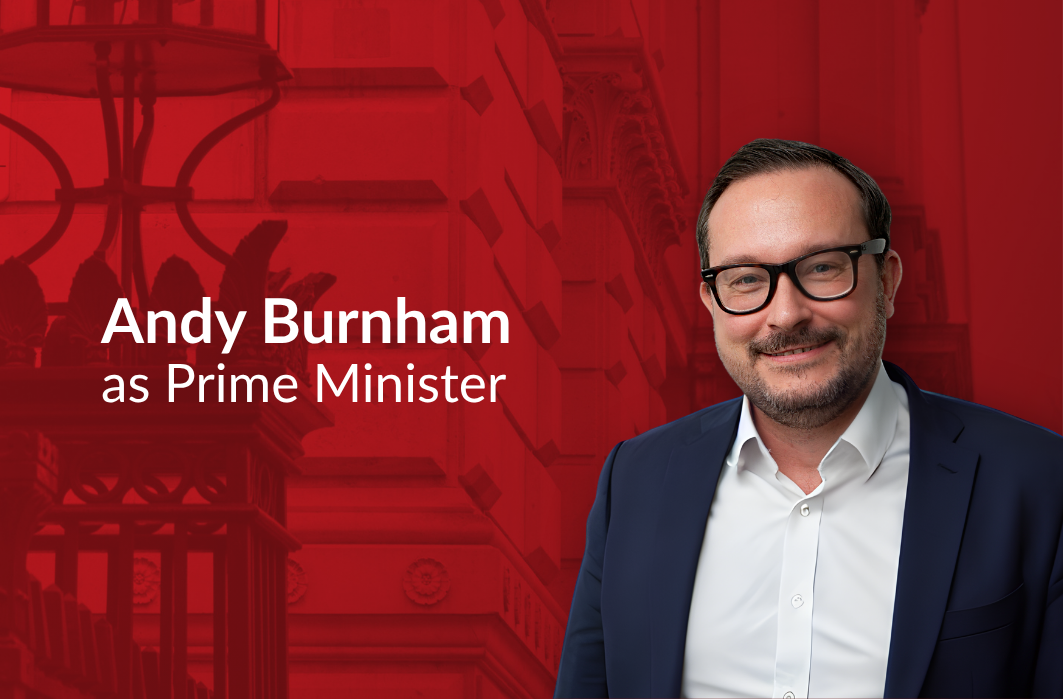
With Andy Burnham becoming Prime Minister, England will have its first national leader whose most recent executive experience was gained through leading a devolved city region rather than serving in Westminster or Whitehall. Whilst Boris Johnson previously served as Mayor of London before entering Downing Street, Burnham’s appointment represents something different: the first time a Prime Minister has moved directly from leading a modern strategic authority into the highest office in government.
Much attention will focus on the policy implications of his arrival in Number 10. The more profound significance, however, may lie in what it says about the maturity of England’s devolution settlement. Over the past decade, metro mayors and strategic authorities have evolved from relatively new institutions into increasingly influential centres of leadership, economic coordination and public service innovation. Burnham’s ascent to the premiership suggests they may now represent a genuine pathway to national leadership.
This matters because institutions are ultimately judged not only on what they deliver, but on the leaders they create. The emergence of strategic authorities as a credible route to the highest levels of public leadership is itself a sign that the devolution agenda has entered a new phase of maturity.
A Different Lens on Government
For much of the devolution era, strategic authorities have sought to persuade central government that local and regional leaders should be trusted with greater responsibility. The debate has often focused on powers, funding and governance arrangements. Under a Prime Minister who has spent much of the last decade operating within a devolved system, however, the conversation may change fundamentally.
Burnham understands first-hand the opportunities and limitations of place-based leadership. He has experienced the challenges of delivering growth, transport reform, housing and public service integration within a system where many of the key levers remain centrally controlled. He has also witnessed the realities of navigating Whitehall, securing investment and building consensus across multiple political and organisational stakeholders.
This does not necessarily imply a rapid transfer of powers, however, it creates the conditions for a different relationship between national and regional leadership. Strategic authorities may increasingly be viewed not as delivery agents of central government, but as partners in the achievement of national objectives. This distinction shifts the emphasis from delegation towards shared accountability.
Number 10 North: Symbolism or System Change?
Perhaps the most visible expression of Burnham’s approach will be the creation of Number 10 North in Manchester, designed not as a regional outpost of central government but as the operational centre of his devolution and growth agenda. Burnham has described it as the “nerve centre of a rewired Britain”, with responsibility for driving devolution, economic renewal and regeneration across the country. The success of the model will depend less on geography than authority.
There is a long history of relocating officials away from London without fundamentally shifting decision-making power. The real test for Number 10 North will therefore be whether it influences investment decisions, aligns departmental priorities and shapes government policy, rather than simply representing a symbolic redistribution of administrative functions.
If successful, Number 10 North could represent a significant departure from the traditional Whitehall model. For the first time, a core part of the Prime Minister’s operation would be embedded within one of England’s largest city regions, creating a more direct connection between national policymaking and the realities of place-based delivery.
For strategic authorities, the implications could be profound. Rather than engaging primarily through individual government departments, they may find themselves interacting with a centre of government expressly designed to understand devolved leadership, place-based growth and regional economic development.
The Maturation of Strategic Authorities
The first generation of combined authorities was primarily focused on institutional establishment. Governance structures needed to be designed, leadership teams assembled, cultures created and credibility established. Strategic authorities have been required to build capability whilst simultaneously delivering results. Success has depended on collaborative leadership, effective governance and the ability to align diverse interests behind a common agenda.
Many strategic authorities are now entering a different phase of maturity. Increasingly, they are expected not simply to coordinate activity but to shape investment decisions, influence economic development, convene public and private sector partners and drive long-term regional growth. As expectations rise, so too does the importance of organisational capability.
A Prime Minister whose political identity was largely forged within this environment may accelerate that evolution, strengthening the role of strategic authorities as core components of England’s governing architecture.
The Emergence of a New Leadership Pipeline
Perhaps the most significant long-term implication lies in talent and leadership. For decades, the route to national political leadership has been largely linear. Experience in Parliament, ministerial office and central government has been regarded as the primary preparation for the highest offices of state. Burnham’s appointment introduces an alternative model.
Metro mayors operate in a distinctive leadership environment. They are required to combine political leadership with executive delivery. They work across organisational boundaries rather than within hierarchical systems. Success depends on influence, partnership, negotiation and coalition-building as much as formal authority. These are increasingly the capabilities required to lead complex economic and social systems. As a result, strategic authorities may come to be viewed not only as centres of policy delivery but also as leadership academies for the next generation of national leaders.
Future mayoral and senior executive appointments may therefore attract an even broader pool of talent. Individuals who previously viewed local and regional government as a destination may increasingly see it as a platform for wider influence and impact. The prospect of leading large-scale change, shaping national debates and influencing outcomes far beyond a single locality may make these roles some of the most attractive leadership opportunities in the public sector.
New Expectations for Leadership Capability
If the status and influence of strategic authorities continue to grow, the implications for leadership capability will be significant. Many combined authority leaders already describe environments characterised by political complexity, competing stakeholder interests, resource constraints and intense public scrutiny. Navigating these conditions requires a distinctive blend of skills that differs markedly from those typically associated with traditional organisational leadership. Three capabilities are likely to become increasingly important.
- First, systems leadership: the ability to operate across organisational boundaries, aligning diverse interests around shared outcomes.
- Second, place leadership: the ability to articulate a compelling long-term vision for a region whilst maintaining legitimacy across communities, institutions and political stakeholders.
- Third, delivery leadership: the ability to translate ambition into visible outcomes, recognising that credibility is ultimately built through execution rather than strategy.
The growing prominence of strategic authorities means these capabilities can no longer be regarded as specialist skills. They are becoming core requirements for leadership within the public sector and, increasingly, beyond it.
From Institutional Reform to Leadership Reform
Much of the debate around devolution has focused on structures, powers and funding settlements. Today’s transition offers a reminder that devolution may ultimately prove to be as important for leadership as it has been for governance. The significance of Andy Burnham becoming Prime Minister is not simply that a metro mayor has reached Number 10. It is that he arrives intending to reshape Number 10 itself.
The creation of Number 10 North signals something potentially more significant than a new phase of devolution policy. It suggests that place-based leadership, once regarded as secondary to national government, may now become embedded within its core operating model. For strategic authorities, the implications extend beyond questions of additional powers or funding. Their long-term influence is increasingly likely to be judged by the quality of leadership they develop, the capability they build and their ability to translate national ambition into successful delivery.
This creates an important challenge for the sector itself. As strategic authorities take on greater responsibility for economic growth, public service reform and regional development, their success will depend increasingly on their ability to attract, develop and retain leaders who can operate effectively within complex systems. The demands of these roles extend far beyond traditional organisational leadership. They require individuals who can work across institutional boundaries, build coalitions among diverse stakeholders, navigate political complexity and sustain long-term change in environments where formal authority is often limited.
In this context, leadership capability becomes more than an organisational concern; it becomes a strategic asset. The authorities that are most successful in developing these capabilities are likely to be those that deliver the strongest outcomes for their places, attract the highest calibre of talent and exercise the greatest influence within England’s evolving governance landscape.
Whether Number 10 North ultimately becomes a catalyst for systemic change or simply a powerful symbol of intent will depend on how authority, resources and accountability evolve over the coming years. What is already clear, however, is that the relationship between national and regional leadership is entering a new phase.
For those leading strategic authorities, the question is no longer whether place-based leadership matters nationally. It is whether strategic authorities can create the conditions in which exceptional leaders choose to build their careers, develop their capabilities and make their greatest impact. Increasingly, the strength of that leadership pipeline may determine not only the success of individual regions, but the effectiveness of the country’s wider system of government.
About the Author
Seb Lowe is Partner, Place & Growth at GatenbySanderson, working with Combined Authorities, development corporations and growth partnerships to identify and develop the leaders responsible for delivering regeneration, investment and long-term place outcomes.
GatenbySanderson’s Place & Growth Leadership practice supports organisations across executive search, interim leadership and leadership development, helping build the leadership capability required to deliver regeneration, economic growth and lasting place outcomes.
Learn more: https://www.gatenbysanderson.com/sector-expertise/local-government/place-growth/