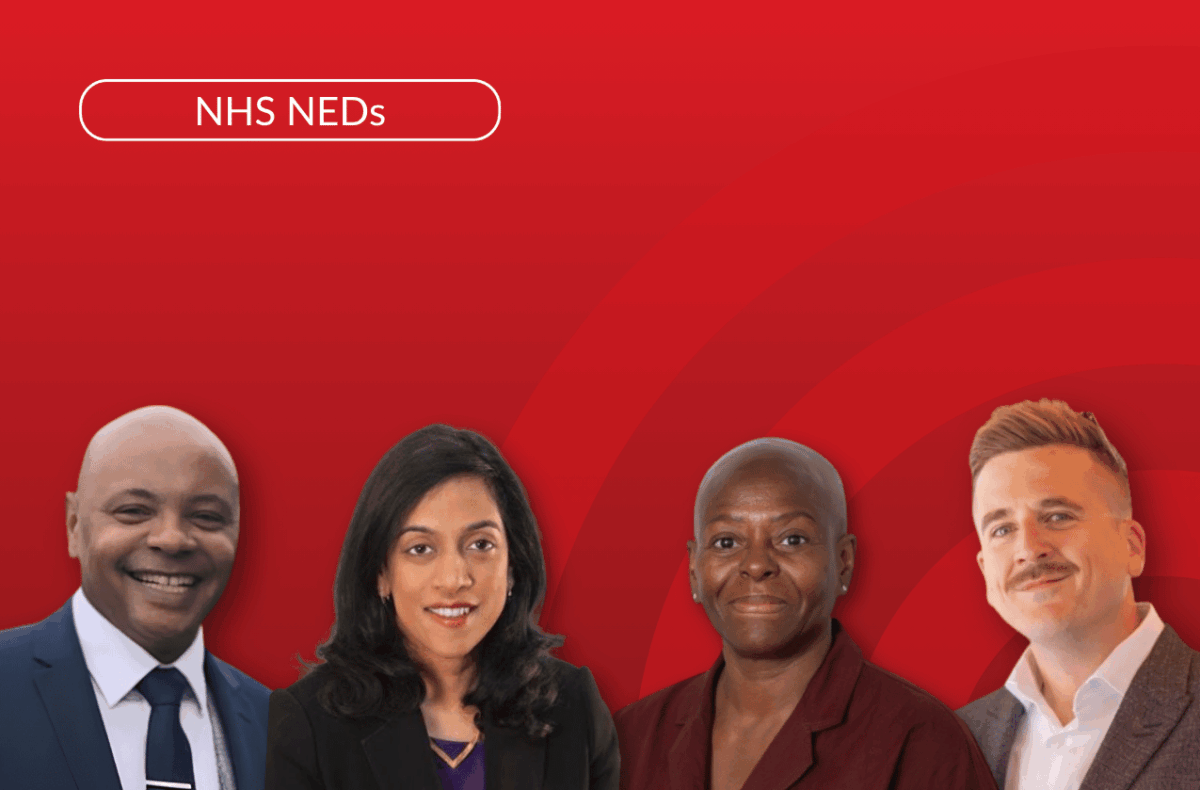
GatenbySanderson is currently hosting a series of webinars designed to help prospective candidates better understand the NHS NED opportunity and what it takes to succeed in the role. Bringing together experienced NHS Chairs, Non-Executive Directors and sector leaders, these sessions offer practical insight into life on an NHS board, the realities of governance and assurance, and the skills and qualities organisations are seeking. They are also an opportunity to demystify the application process, hear first-hand experiences from those already serving on NHS boards, and help senior leaders decide whether an NHS NED appointment could be the right next step in their board career.
Drawing on insights from NHS Chair Claudette Elliott, Deputy Chair and NED Durka Dougall, NED Adam Crampsie, NHS England’s Wayne Coulthurst and GatenbySanderson’s Health Sector, Partner Robin Staveley, this session offered a candid view of life around the NHS board table.
Why Become an NHS Non-Executive Director?
At its heart, the NHS NED role is about public service, governance and impact. As Wayne Coulthurst of NHS England explained, NHS NED positions provide an opportunity for experienced leaders to use their skills and perspectives to help shape healthcare services, influence strategy and improve outcomes for patients, staff and communities. Importantly, NHS England is actively seeking talent from a broad range of backgrounds, not just those with NHS experience.
For Claudette Elliott, Chair of Pennine Care NHS Foundation Trust, the role is deeply connected to purpose.
“It’s a real privilege to be part of a board in the NHS. It is fundamentally for me about public service and making a difference.”
Durka Dougall echoed this sentiment, highlighting the opportunity to create change at scale.
“What first attracted me to board leadership was really the opportunity to make a difference at scale.”
You Don’t Need an NHS Background to Succeed
One of the strongest themes throughout the discussion was that NHS boards need greater diversity of thought, experience and professional perspective. Many prospective applicants worry they lack the “right” NHS experience. The panel challenged that assumption directly. Claudette emphasised that when recruiting new NEDs, she is not primarily looking for NHS experts.
“I don’t primarily look for people who know the NHS inside out. I look for people who can make the board different.”
NHS boardrooms benefit from leaders who bring expertise from industries including finance, operations, digital, manufacturing, transport, housing, professional services and the voluntary sector. In fact, several questions during the webinar came from professionals working in sectors such as oil and gas, civil service, communications, technology and education. The consistent response from the panel was clear: relevant leadership experience matters more than NHS tenure.
What Makes an Effective NHS NED?
While backgrounds may differ, the panel identified several qualities shared by effective NHS Non-Executive Directors.
Curiosity
Curiosity emerged as perhaps the most frequently cited attribute, Claudette described it as one of the most important qualities a NED can possess.
“Curiosity is one of the most important qualities in a NED.”
The role is not about having all the answers, it’s about asking the right questions, seeking assurance and connecting board discussions to real-world experiences.
Courage and Constructive Challenge
NEDs play a critical role in providing challenge, oversight and independent perspective. However, that challenge must be delivered thoughtfully, Durka highlighted the balance required:
“Effective board leadership is hardly ever about having all the answers. It’s about being curious, bringing that right level of support and challenge.”
For boards to function effectively, NEDs must be willing to raise concerns, identify blind spots and ask difficult questions while maintaining productive relationships with executive teams.
Compassion and Listening
The speakers repeatedly stressed that NHS governance is ultimately about people. Claudette explained that behind every board paper, performance metric and financial report are real patients, families and staff.
“I look for compassion… because they are the people who we are looking after.”
Listening, understanding lived experiences and spending time in services were all highlighted as essential parts of effective board leadership.
Understanding the Difference Between Governance and Management
A key transition for professionals moving into their first NED role is learning the distinction between executive leadership and non-executive governance. As Claudette explained:
“Being a NED is not about managing, the executives run the organisation. As NEDs, we’re here to provide scrutiny, challenge, assurance, oversight and perspectives.”
For experienced executives considering NHS board roles, this shift in mindset can require adjustment. Success comes from influencing rather than directing and focusing on assurance rather than operational delivery. Adam Crampsie reinforced this point, noting that NHS NED roles had significantly strengthened his own executive leadership capabilities.
“I absolutely am now a better executive as a result of being a NED.”
The Importance of Assurance, Risk and Triangulation
For those preparing to apply for NHS NED roles, one practical takeaway stood out. Understanding assurance, governance and risk management is crucial. Adam repeatedly referenced the concept of “triangulation” – bringing together data, observations, staff feedback and lived experience to create a rounded understanding of organisational performance.
“Our role is to take what we read, what we hear, what we see and what we feel and add all that together to create a really rounded view of what’s happening.”
He also highlighted that risk management, board assurance frameworks and governance processes form a core part of the non-executive role. For aspiring NEDs, attending NHS public board meetings and reading published board papers can provide valuable insight into how boards operate in practice.
Breaking Into Your First NHS NED Role
The webinar addressed one of the most common frustrations experienced by aspiring NEDs: needing NED experience to secure a NED appointment.
The panel’s advice included:
- Attend NHS board meetings in public
- Read board papers and annual reports
- Speak with existing NEDs and Chairs
- Consider Associate NED opportunities
- Develop a strong understanding of assurance and governance
- Tailor applications to the specific challenges of each organisation
- Demonstrate how your experience translates into board-level impact.
Adam offered one particularly powerful piece of advice:
“The people who succeed the best in interview who are not already NEDs are those who answer the questions as if they are the NED already.”
Diversity of Thought Will Shape the Future of NHS Boards
Perhaps the most important message of the session was that NHS boards are actively seeking broader representation and fresh perspectives. Whether your background is in operations, HR, digital transformation, manufacturing, finance, public health, the civil service or the charitable sector, your experience could add real value to NHS governance.
As Durka Dougall put it:
“Value your difference.”
And Claudette offered a fitting closing reflection:
“The best NED appointments aren’t necessarily the people who fit neatly into what we already have. They are the people who make us think differently.”
Interested in Becoming an NHS Non-Executive Director?
NHS England’s NED Talent Pipeline is designed to support experienced leaders who are ready to take the next step into NHS board leadership. Whether you come from the public, private or voluntary sector, there has never been a better time to explore how your skills can contribute to better outcomes for patients and communities.
Our Health team is here to help with your Executive Search, Interim Leadership or Leadership Development needs. We are the number one provider of services to recruit senior executive and board members across the health sector, including NHS providers, ICBs and Arm’s Length Bodies, due to our depth of understanding of the NHS, our candidate care, and our networks.