By GatenbySanderson | Pride Month 2026, Pride in Leadership Series. Interview with Matthew Redford
For Pride Month 2026, our Pride in Leadership series evolves. This year, we move beyond personal journeys to focus on the realities of leadership under pressure, the decisions, trade-offs and moments where inclusion is truly tested.
In Moments That Matter: Leadership Decisions on Inclusion, we spotlight senior executives and board-level leaders navigating complex organisational environments where inclusion is not always straightforward, and where the consequences of decisions are felt across governance, culture and performance.
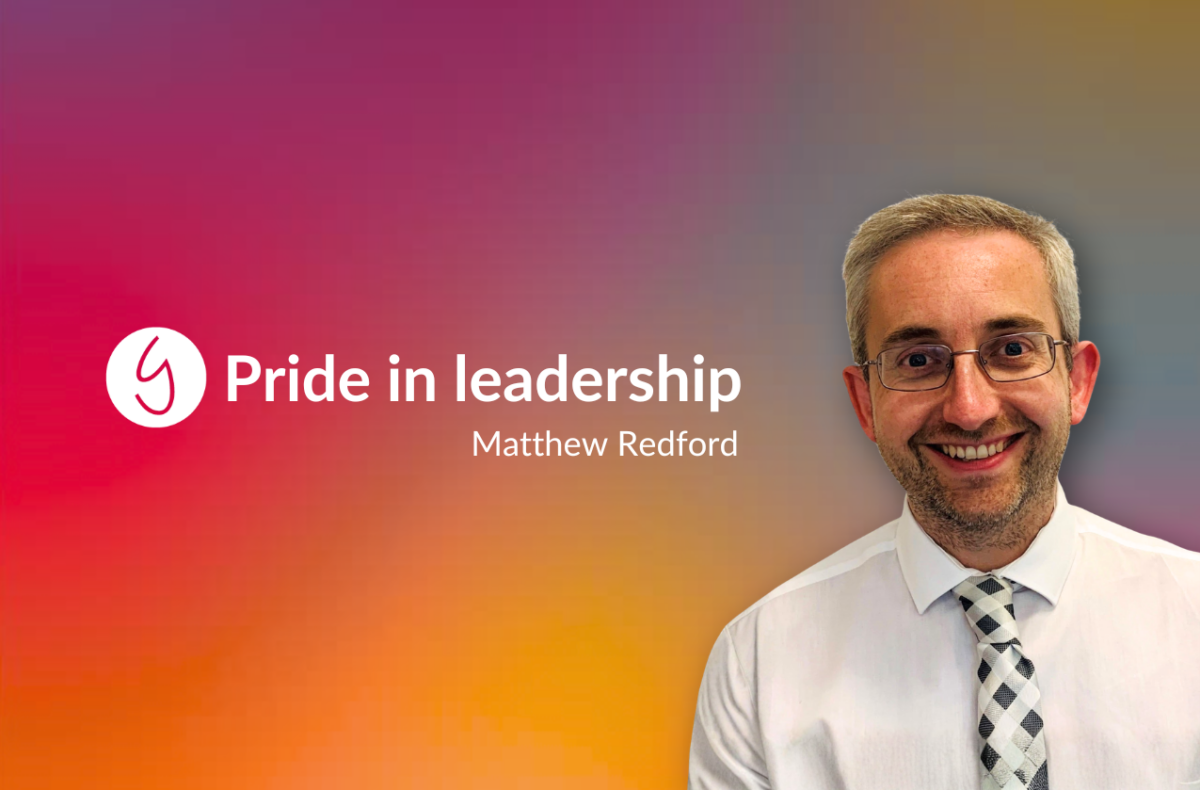
In this edition, Katrina Paget speaks to Matthew Redford, Chief Executive and Registrar at General Osteopathic Council, Trustee at the National Council of Osteopathic Research and Member, Joint Audit Committee, Kent Police Crime Commissioner, on the importance of leading with clarity and conviction and in making inclusion visible and routine.
1. “Describe a decision you made where inclusion was a factor, but not the only priority.”
On becoming Chief Executive and Registrar, I made a significant decision to overhaul how the General Osteopathic Council (GOsC) recruited its non‑executive members. In 2019, only around 5% of applicants came from Black or minority ethnic backgrounds. Within two years, that figure rose to over 40%. We also improved response rates across a range of other protected characteristics.
Inclusion was a clear driver, but it wasn’t the only priority.
The focus was on widening the pool of high‑quality candidates by removing barriers that were unintentionally signalling who ‘typically’ applied. As a team we redesigned our imagery and language to feel more open and representative, shifted our engagement/advertising to make the GOsC more accessible, and ensured our processes felt more approachable, transparent and aligned with our organisational values.
Inclusion mattered because it strengthened fairness and representation, but the core objective was broader: to attract the strongest possible governance talent. By making the GOsC more visibly inclusive, we improved both diversity and the calibre of people stepping forward to participate in our non-executive roles.
2. “When have you got it wrong, and what did you change?”
I should have pushed for GOsC to participate earlier and more visibly in Pride before I became Chief Executive and Registrar. In hindsight, delaying that decision meant we missed an opportunity to show clear, public solidarity with LGBTQ+ osteopaths, patients and partners across the wider health and care sector.
The impact of that delay was more than symbolic. Visibility matters. By not stepping forward sooner, there was a gap between intention and action, and it risked undermining our wider equity, diversity, inclusion and belonging responsibilities.
What I changed was my own approach. I became more active in using my voice, not waiting for consensus. Our participation in Pride is now a visible, confident expression of belonging and allyship – and a reminder to me of the importance of leading with clarity and conviction.
3. “How do you ensure inclusion doesn’t get deprioritised under pressure?”
Inclusion is a core organisational discipline, not an optional add‑on. We would never set aside financial stewardship or risk management so why would we set aside inclusion? Inclusion has to be embedded, normalised and pervasive in how we work, and when it is part of our culture, it is far less vulnerable to being squeezed out when time, resources or attention are under pressure.
As Chief Executive, my role is to make inclusion visible and routine. I do that in several ways. First, I am open about being a gay man and the importance of bringing my whole self to work. That visibility matters – it signals that authenticity is valued, not managed or hidden. I encourage others to do the same because seeing leaders model openness creates permission for people to feel safe and seen.
Second, I actively reinforce that diversity of thought is a strength in regulation. Under pressure, organisations can default to familiar voices or the quickest route to consensus. But it is diversity of thought that leads to better outcomes.
Third, as an organisation we talk about our mistakes and what we learn from them. That creates a culture where inclusion is not performative but developmental.
4. “What is one leadership behaviour you’ve changed that had the biggest impact?”
One leadership behaviour I have developed over time is being willing to lead with vulnerability. During the pandemic and other difficult periods, people do not need leaders who appear, or try to appear, invulnerable; they need leaders who are honest about uncertainty, open about pressure, and willing to show the human side of leadership. That is something I try to lead on from the front.
The reason this matters is that vulnerability creates trust. It gives others permission to be open, to share and to create and strengthen psychological safety. I believe, that due to this culture, colleagues are more willing to raise concerns early and ask for help. That, in turn, improves the quality of our decision‑making and our resilience under pressure.
Leading with vulnerability has not undermined my role or position; it has made me more effective – my staff see the real me, not an inauthentic version of a leader. It has helped create a culture where people bring their whole selves to work, where honesty is normalised, and where commitment is built on trust rather than hierarchy.
5. “What do senior leaders still avoid talking about when it comes to LGBTQ+ inclusion?”
Avoiding talking about LGBTQ+ inclusion happens because silence can feel safer than visibility. I don’t believe that silence is rooted in opposition, more often it comes from anxiety about saying the wrong thing, a fear of mis-stepping, or uncertainty about causing offence.
When leaders stay quiet, it creates a vacuum where people make assumptions about what is valued, who is seen, and whose experiences are recognised. That silence can be interpreted as neutrality, which in turn can be experienced as indifference. This caution can lead to leadership that is overly careful at precisely the moments when clarity, courage and visibility are needed.
Join the Conversation
This article is part of our ongoing Pride in Leadership series, where we amplify the voices of LGBTQ+ leaders and allies across public life.
Why This Matters for Pride Month 2026
This year’s theme: Moments That Matter, reflects a critical shift, from celebration to accountability in leadership and governance. Pride is not only about visibility, it is about how executives and boards make decisions under pressure, and whether inclusion holds when it is hardest to prioritise.
As Matthew’s reflections highlight, inclusive leadership is not defined by intention alone, but by systems, decisions and behaviours that stand up to scrutiny at every level of leadership.
Explore more from the GatenbySanderson Pride in Leadership series and discover how inclusive leadership and governance are evolving in 2026.