Moving from an executive or interim leadership career into a Non-Executive Director (NED) role can feel like a natural next step. However, succeeding as a non-executive requires more than transferring executive experience into the boardroom.
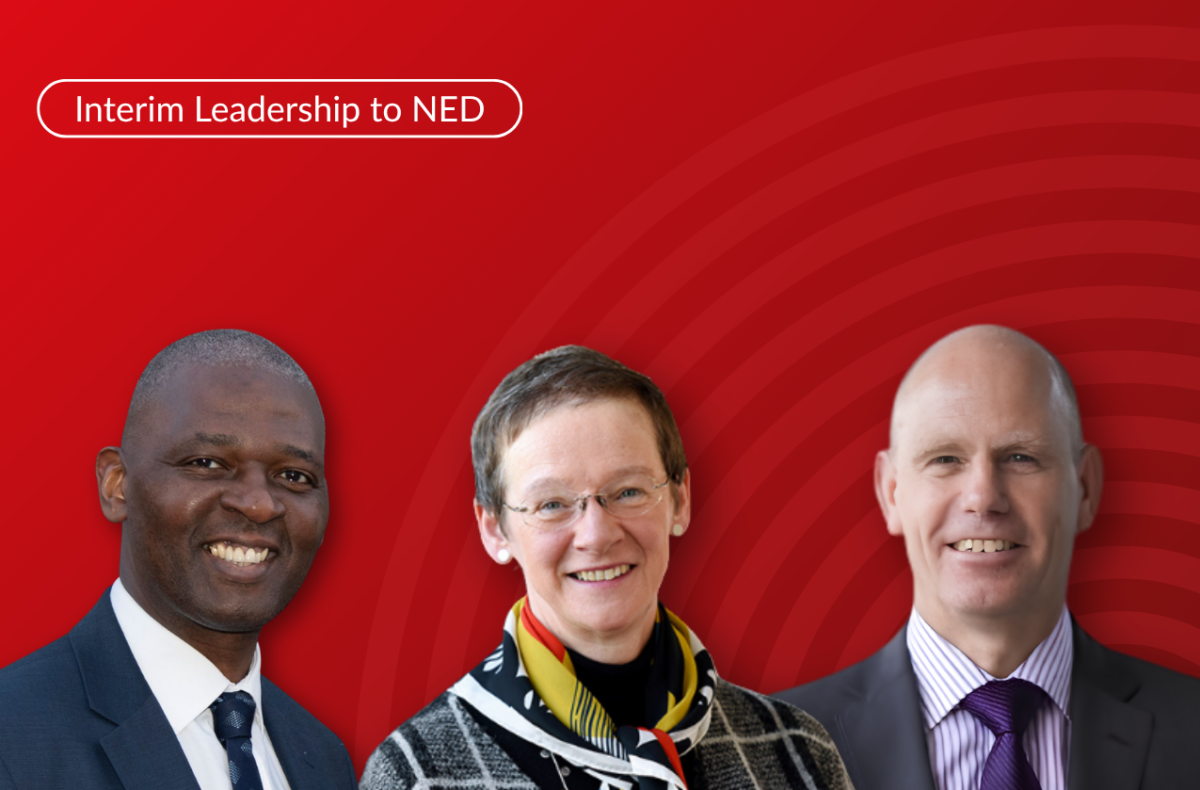
In our recent webinar, Sally Wilson, Partner in GatenbySanderson’s Interim Practice was joined by three esteemed guests:
- Wallace Sampson OBE – Consultant, Commissioner, NED, Governor, Coach
- Richard Carr – Commissioner, NED, retired Local Authority Chief Executive, Interim MD
- Ada Burns – Chief Executive, Darlington Borough Council
The panel explored what it takes to make the transition successfully. Drawing on their own board and leadership experience, the panel discussed the change in mindset required, what boards look for in NED candidates, how to secure a first appointment and how aspiring non-executives can position themselves for future opportunities.
Key takeaways:
1. Move from delivery to strategic oversight
Interim and executive leaders are accustomed to entering organisations, understanding challenges quickly and delivering results. These are highly transferable skills, but the responsibilities change when moving into a non-executive position. As a NED, you are no longer responsible for operational delivery. Your role is to provide strategic oversight, assurance, support and constructive challenge, while allowing the Chief Executive and executive team to run the organisation.
Wallace cautioned against becoming a “chief executive in disguise”. Effective NEDs know when to step back from delivery and instead use their experience to ask the right questions, test assumptions and hold the executive team to account.
2. Trust, but verify
Good non-executive leadership requires an appropriate balance between trust and independent scrutiny.
Wallace described this as “trust but verify”. Board papers and executive reporting provide essential information, but NEDs also need to satisfy themselves that the picture presented in the boardroom reflects what is happening across the organisation. That can mean increasing their visibility, speaking with staff and stakeholders, visiting operational areas and asking informed questions.
Richard also highlighted the value of triangulation. Rather than relying on a single source of information, effective NEDs seek different perspectives to build a more complete picture before reaching conclusions.
3. Understand what boards are really looking for
Senior executive experience alone does not necessarily make someone an effective NED.
The panel identified several qualities boards value:
- Governance knowledge and strategic judgement
- Analytical ability
- Emotional intelligence
- An understanding of complex organisations and systems
- Stakeholder management
- Independent thinking
- The confidence to challenge constructively
- Strong preparation and curiosity
- The ability to balance challenge with support
Ada emphasised that even when someone is appointed for specialist expertise, such as finance, digital or people leadership, they are ultimately joining the board as a governor of the whole organisation. Preparation is therefore critical. Effective NEDs understand the organisation, know where their skills can have the greatest impact and choose their interventions carefully.
4. Challenge constructively and build trust
One of the most important skills for a first-time Non-Executive Director is knowing how and when to challenge.
Wallace noted that strong NEDs do not contribute simply for the sake of being heard. Their interventions should add value. At the same time, they must be prepared to ask difficult questions and speak truth to power when necessary.
Ada highlighted the importance of emotional intelligence. The strongest NEDs develop trusted relationships while retaining the independence required to scrutinise decisions. Individual challenge also sits within collective accountability. Once the board reaches a decision, non-executives share responsibility for it.
5. Be clear about why you want to become a NED
Before pursuing a first non-executive role, candidates should ask themselves a simple question: Why do I want to become a Non-Executive Director? Motivations will differ. They may include giving something back, contributing to a cause, using professional expertise in a different way, developing a portfolio career or taking on a new leadership challenge. Being clear about that motivation makes it easier to articulate what you can contribute.
Richard also recommended considering values and purpose alignment before accepting a position. A candidate is more likely to make an effective contribution when they genuinely believe in what the organisation is trying to achieve. Candidates should also assess the board itself.
Ada encouraged prospective NEDs to understand whether a board genuinely welcomes independent challenge and values the contribution of its non-executives.
6. Bring your whole experience to the boardroom
Boards benefit from more than technical expertise.
Wallace encouraged aspiring NEDs to recognise the value of their lived experience and individual perspective, including experiences relating to equality, diversity and social inclusion.
For candidates from underrepresented backgrounds, peer networks and buddying relationships can be particularly valuable, providing opportunities to share experiences, build confidence and understand how different board environments operate. Authenticity matters. The objective should not be to replicate the profile of people already around the table, but to understand the distinctive experience and perspective you can add.
7. Build a pathway to your first NED appointment
There is no single route to securing a first Non-Executive Director role.
The panel recommended several practical steps:
- Build your professional profile and visibility.
- Develop relationships with current and former NEDs.
- Maintain relationships with executive search firms.
- Research the sectors and organisations that interest you.
- Consider Associate NED or trustee positions as a route to gaining board experience.
- Understand the different recruitment routes used across sectors.
- Tailor every application to the organisation and its current priorities.
Ada advised candidates to avoid simply listing previous positions and responsibilities. A strong NED application should instead demonstrate the skills, perspective and leadership experience that make you relevant to that particular board at that particular time.
8. Don’t let rejection define your suitability
Securing a first NED position can take time.
Richard stressed that an unsuccessful application should not automatically be seen as evidence that someone lacks the capability to become a non-executive. Boards are often recruiting against a very specific combination of skills, experience and strategic priorities.
Wallace recommended seeking feedback where possible, learning from each process and continuing to pursue opportunities where there is a strong fit. Networking and visibility can also create opportunities organically. In some cases, existing relationships, sector involvement, or previous board exposure can lead to organisations approaching potential candidates directly.
9. Be realistic about the time commitment
The advertised time commitment for a NED position may not tell the whole story. Alongside formal board meetings, non-executives may be expected to:
- Sit on or chair committees.
- Undertake board champion responsibilities.
- Participate in appointment or appeal panels.
- Visit services or operational locations.
- Engage with staff and stakeholders.
- Prepare thoroughly for meetings and review substantial board papers.
Candidates therefore need to understand the full governance workload before taking an appointment.
Ada also encouraged boards to think flexibly about candidates who may be “expertise-rich but time-poor”. Candidates, meanwhile, should be transparent about their availability and make sure they can give the role the commitment it deserves.
10. Position yourself for future board opportunities
GatenbySanderson recruits approximately 200 NED and Chair-level positions each year, giving the team extensive insight into what organisations and boards look for in prospective candidates.
For interim leaders considering portfolio or non-executive careers, the transition starts with understanding your value differently. Your delivery experience still matters, but in the boardroom its value comes from how you use it to question, challenge, assure and support, rather than to take control of delivery.
Interested in your next interim leadership or non-executive opportunity?
- Are you a NED? Join GatenbySanderson to help you stay connected to relevant opportunities and conversations across our specialist markets.p
- Are you an Interim Leader? Join our Interim communications list to share your interest with our team, match with peers, and stay informed about future opportunities.