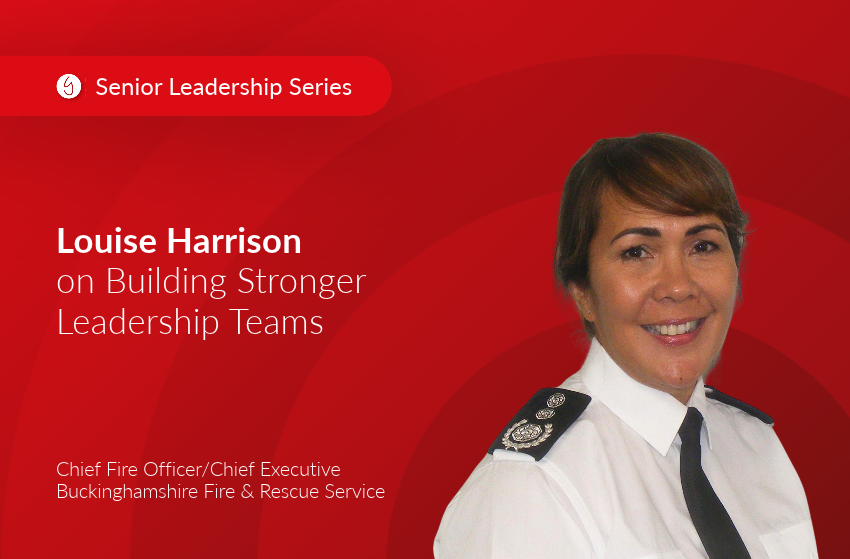
By GatenbySanderson | Leadership Series. Community Protection Practice Interview with Louise Harrison, Chief Fire Officer / Chief Executive, Buckinghamshire Fire & Rescue Service
Peter Buffoni, GatenbySanderson’s Community Protection Practice, speaks with Louise Harrison, Chief Fire Officer / Chief Executive of Buckinghamshire Fire & Rescue Service, about diversity of thought, representation, active listening and the role inclusive leadership can play in creating stronger organisations.
Building Stronger Teams: Louise Harrison on Leadership, Challenge and Listening
1. Can you share an example of a decision or initiative that helped strengthen inclusion, representation or community engagement within your organisation?
We recognise that the most successful teams are those that have a good blend of different perspectives, life experiences and diverse thinking. As an organisation committed to continuous improvement, we have a duty to address the imbalance and encourage and improve that mix.
In the operational setting of the Fire sector, there is a common misconception about the physical demands and expectations that could be a barrier in recruitment, so we have found that running bespoke tester days, with follow-up support on fitness, has had a significant impact on attendance and subsequent applications from under-represented groups.
2. How has learning from different lived experiences influenced your approach to leadership?
Put simply, it allows me to make more informed and balanced decisions, with a greater appreciation of the wider impact those decisions might have on people, outcomes and relationships, and has enhanced my emotional intelligence.
3. Describe a decision you made where inclusion was a factor, but not the only priority.
I am clear that you can have a diverse workforce and not be inclusive, and vice versa. The latter is as important, controversially I would say more so, and so I have prioritised the need to appoint to key roles based more on diversity of thought and inclusivity, over the need for visible representation.
4. When have you got it wrong, and what did you change?
The age-old leadership mistake of making an ethical decision with good intent, but based on assumptions before actually listening to the voice of those the decisions impacted upon. As a result, we ran a small closed workshop and then ensured that future decisions were brought to our Culture and Ethics Steering Group first. Some decisions need to be made that may not be popular; however, understanding why is the key communications factor that had been missed.
5. What is one lesson from a colleague, mentor, community leader or historical figure that has shaped the way you lead today?
“It is not because things are difficult that we do not dare, it is because we do not dare that they are difficult.” – Source unknown
6. How do you ensure inclusion doesn’t get deprioritised under pressure?
Having a diverse leadership team around you ensures that inclusion is never overlooked. It is having the team calling each other out and challenging each other that ensures we never compromise inadvertently when decisions are made.
The challenge is ensuring that we create that mix at every level of the organisation.
7. What is one leadership behaviour you’ve changed that has had the biggest impact?
Consciously trying to become a better active listener.
Read our Black History Month Leadership Series
Explore more conversations from Honouring Our Communities: Leadership, Representation and Legacy, including our interview with Chantelle Brown on inclusive leadership, representation and creating opportunities for future generations
Speak to GatenbySanderson about building diverse and inclusive leadership teams:
Contact our team.